

About this fungus
Bloody Milkcap is a fungus in the Russulaceae family. Its habitat and field characteristics are summarised below.
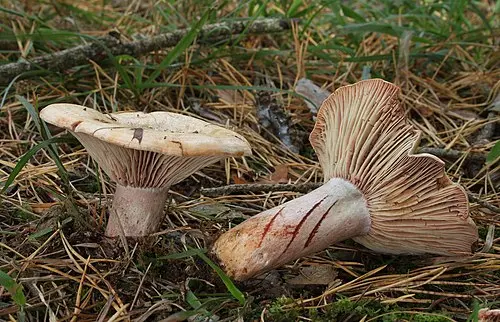
A sturdy pine milkcap with a pink-buff to orange-brown cap, reddish gills and darker pits on the stem. Damage releases wine-red to blood-red latex and later develops dull green stains.
What to check
Observe naturally damaged gills for latex that is wine-red from the outset, then note green staining, decurrent reddish gills, stem pits, no ring or volva, pine nearby and calcareous soil. Latex colour and its timing help place the mushroom, but close Deliciosi species may still require microscopy or DNA.
Variation
Cap colour varies from pale pink-buff to orange or vinaceous brown, with zoning sometimes faint. Bruised or ageing areas become grey-green. Dry specimens may release little latex and older caps can lose their clean colour contrasts.
Lookalikes
Lactarius deliciosus begins with carrot-orange latex. Lactarius semisanguifluus also begins orange before changing to wine-red. Other red-latex milkcaps occur regionally around the Mediterranean and in Asia, so immediate latex colour, tree partner, geography and microscopic features should be considered together.
Habitat and range
Mycorrhizal with pine, especially on calcareous soil in southern and central Europe and the Mediterranean region, with records extending into parts of Asia. Similar red-latex milkcaps elsewhere should not automatically receive this name.
Food safety
Choice edible.
Use this profile to learn what to examine and compare, not as proof that a mushroom is safe to eat. Check the whole specimen and every important lookalike before reaching an identification.
Photographs
 Holger Krisp / CC BY 3.0
Species to compare
Similar mushrooms to compare against: