
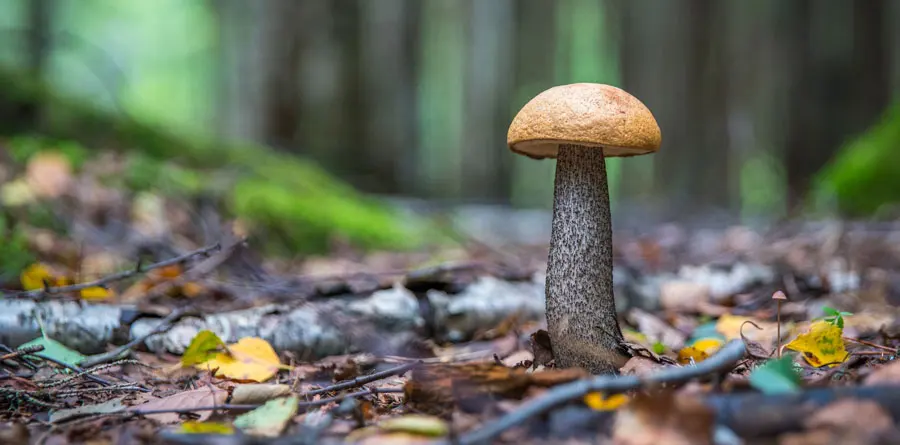
The Shroomify Research Project looks at how weather affects the appearance of mushrooms. In this study, we brought together over a million matched fungal events from Europe and North America, covering 362 species, along with 14 years of information about rain, soil moisture, soil temperature and air temperature.
The observations are most plentiful in north-western Europe, but the questions are not limited to one country. Rain, changing soil temperature and water held in the ground are part of fungal ecology wherever a species grows. By comparing weather with what is normal for each place and season, rather than using one fixed temperature or rainfall threshold, we can look for patterns that make sense in very different climates. Tests between continents suggest that part of the weather response carries across, while local trees, soils and habitats still matter.
We looked at weather over several periods, from the previous few days to the previous two months. This matters because mushrooms respond to conditions that build and change over time. A spell of rain, a gradual cooling of the soil and the amount of water left in the ground can each play a different part.
The clearest finding is that there is no single kind of “mushroom weather”. Each species has its own pattern. The conditions that favour a cep are not the same as those associated with a chanterelle, a morel or chicken of the woods.
Each species follows its own pattern
Weather improved our ability to explain the timing of records for most of the species we studied. The improvement was small for some fungi and much stronger for others. The most useful weather factor also changed from one species to another.
Rainfall and soil moisture, for example, are not interchangeable. Rain tells us that water has fallen. Soil moisture tells us how much water remains after it has drained away or evaporated. Soil temperature describes conditions around the underground fungus, while air temperature describes conditions above it. Looking at these separately reveals patterns that would be hidden by a simple wet or dry rating.
The temperature measurements need a little care. Air temperature is the estimated daily average two metres above the ground, while soil temperature is the estimated average 7 to 28 centimetres below the surface. Both come from ERA5 weather reanalysis rather than thermometers beside each mushroom. They usually move together. For the species pages, we therefore test them separately and withhold a same-period result if air and soil temperature point in opposite directions. We also withhold a result when well-supported European and North American comparisons point in opposite directions. This avoids turning an unstable or regional pattern into a general biological story.
These results show associations in a large collection of real-world records. They do not prove that one weather event caused a mushroom to appear, and they should not be read as exact rules. Their value lies in showing which combinations of weather and timing repeatedly appear alongside records of each species.
Six species in detail
Cep, also known as porcini or king bolete (Boletus edulis), showed a recognisable change from background conditions to the weeks immediately before a record. The longer 22 to 60 day period was generally warmer and drier than normal. During roughly the final three weeks, records were more common after above-normal rain, wetter soil and cooling air and soil. This does not identify one trigger, but it does show that the recent change in conditions carried useful information beyond the normal autumn season.
Chanterelle (Cantharellus cibarius) had one of the clearest sustained moisture patterns. Soil was wetter than normal throughout the periods we tested, from the previous few days to the previous two months. Rainfall was higher in the final week and across the longer 31 to 60 day period. Air temperature did not show a repeatable link, so the result is better described as a moisture association than as a particular warm or cold spell.
Hedgehog fungus, also called hedgehog mushroom (Hydnum repandum), was also linked with wetter soil, but the association became stronger over the longer periods. The clearest rainfall result covered 31 to 60 days before a record, and the same longer background was cooler than normal. This points to a sustained cool, moist setting rather than a response that can be reduced to the most recent shower.
Parasol (Macrolepiota procera) was one of the species most strongly linked with weather. The 31 to 60 day background was warmer than normal. Closer to a record, rain was higher from about four to twenty-one days beforehand, the soil was wetter during the final fortnight, and both air and soil were cooler around eight to fourteen days beforehand. The air and soil measurements agree here: the earlier warm background was followed by a wetter, cooler period.
Morel (Morchella esculenta) did not show the drying pattern suggested by the earlier model. In the checked comparison, records were associated with wetter soil through most of the preceding three weeks and with above-normal rain at several points during the preceding month. Soil was cooler than normal four to seven days beforehand, while air temperature showed no clear repeatable difference. The morel sample is smaller than those for the common autumn species above, so this remains a result to treat with extra care.
Chicken of the woods (Laetiporus sulphureus) provided a useful contrast because it fruits from wood rather than directly from the soil. Across most of the preceding month, records were associated with warmer air and soil, drier ground and less rain. That pattern is clear in the records, but the fungus can remain visible after it forms. It should therefore be read as an association with the date it was recorded, not as a precise account of the day a fresh bracket began to grow.
Season depends on place
A mushroom season does not begin on the same date everywhere. Latitude affects day length and the amount of warmth built up through the year. Elevation changes temperature, exposure and snow cover. Slope, aspect and tree cover create further local differences.
This is particularly important in upland and northern areas, whether that is the Cairngorms, the Alps, Scandinavia or the mountains of North America. A high site may be well into its local fruiting season even when a broad regional comparison says that the weather is cooler or drier than normal. “Below normal” does not automatically mean worse for mushrooms. Cooler conditions may suit one species, while holding back another.
The current research compares each location with its usual seasonal weather and adjusts the expected fruiting season across broad latitude bands. We are now working on a more detailed treatment of elevation and terrain. Until that local timing is reliable, the map should not turn a general weather difference into a confident claim that mushroom conditions are poor.
Testing against what we already know
Tree and habitat relationships give us an important way to test the work. The data recover well-known links such as chanterelle with pine, winter chanterelle with spruce and orange birch bolete with birch. These are not surprising discoveries. They are checks that the habitat data are behaving sensibly before we place confidence in less familiar weather patterns. The present tree analysis uses European forest data, while the weather analysis also includes North American records.
Soil chemistry, soil texture, organic matter, bedrock and terrain help us describe where suitable habitat is likely to exist. Including them also reduces the risk of mistaking a host-tree pattern for a weather response. The interesting question is then what weather can add after the normal season and the character of the habitat have already been considered.
How to read the results
Fungal observations gathered in the field are never as tidy as a controlled experiment. People record more fungi near roads, paths and populated areas. Some species attract far more attention than others. Weather and soil data cover areas of land rather than the exact patch where each mushroom grew.
We have tried to reduce those problems by comparing records with similar places and dates, allowing for changes in recording effort and testing the models on data that were not used to build them. We also repeat the analysis to see whether the direction of each result remains steady. These checks make the findings more useful, but they cannot remove every source of uncertainty.
The results are therefore best read as carefully tested patterns, not fixed rules. They can tell us which conditions have tended to accompany a species and offer a useful starting point in other parts of its range. They cannot guarantee that the same response will be equally strong in every region, or that the fungus will be present at a particular place on a particular day.
Bringing the research into Shroomify
Our aim is to give each species a clear account of the weather pattern linked with its fruiting. That will include the balance of rain and soil moisture, the relevant temperature changes, how long the response appears to take and how the pattern changes with season and habitat.
This page will continue to share selected examples of the findings. More detailed seasonal and weather insights are planned as a paid feature in Shroomify, where interested users will be able to explore the evidence for individual species. Results will be checked and improved as the work develops.
This information is intended to help people understand fungal ecology and plan better observations. It cannot identify an individual mushroom or decide whether it is safe to eat.
Supporting literature
- Phillips et al. (2009), Sample selection bias and presence-only distribution models.
- Andrew et al. (2018), Explaining European fungal fruiting phenology with climate variability.
- Kauserud et al. (2008), Mushroom fruiting and climate change.
- Newbound et al. (2010), Phenology of epigeous macrofungi found in red gum woodlands.
The Shroomify Research Project is an ongoing independent analysis. Results describe patterns in records from the field, not controlled experiments, and will be revised as the data and testing improve.