
About this fungus
Ghost Bolete is a fungus in the Boletaceae family. Its habitat and field characteristics are summarised below.
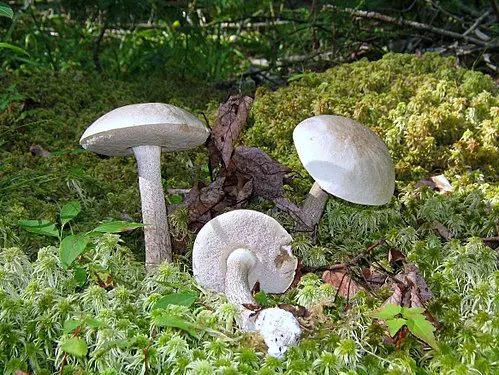
A slender, very pale birch bolete of wet sphagnum and boggy ground. Fresh caps are whitish, while the stem carries fine pale scabers that darken with age.
What to check
Confirm pores rather than gills, birch nearby, and a wet acidic habitat. The cap is white to cream when young. Stem scabers begin whitish or pale grey and become darker. Cut flesh may flush pinkish and often develops blue-green colour near the stem base. There is no ring or volva.
Variation
Older caps can become buff, tan or greenish and lose the ghostly white appearance. Staining can be weak or slow, so habitat and the combination of pale cap and scabered stem matter more than one colour reaction.
Lookalikes
Brown Birch Bolete usually begins with a clearly brown cap and lacks the same combination of boggy sphagnum habitat and blue-green stem-base tones. Other pale birch Leccinum overlap and can require microscopy or DNA, particularly outside the core European concept.
Habitat and range
Ectomycorrhizal with birch in wet acidic places, especially sphagnum bogs, wet heath and damp scrub or woodland margins. Similar pale Leccinum occur regionally, so records far outside Eurasia require care.
Food safety
Edible.
Use this profile to learn what to examine and compare, not as proof that a mushroom is safe to eat. Check the whole specimen and every important lookalike before reaching an identification.