

About this fungus
Orange Oak Bolete is a fungus in the Boletaceae family. Its habitat and field characteristics are summarised below.
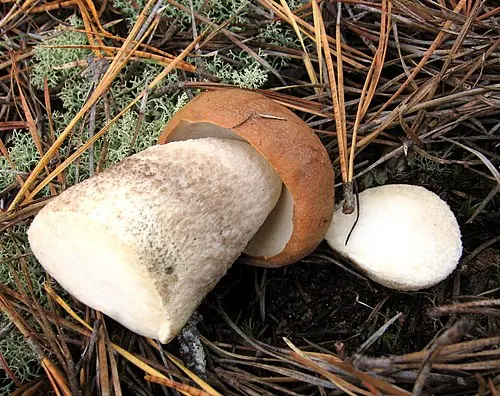
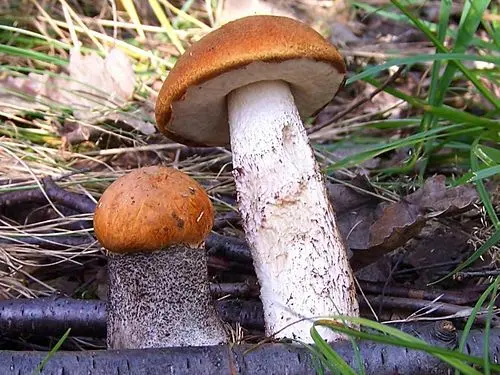
A robust orange-red bolete with a tall pale stem covered in coarse scabers. The cap margin often hangs slightly beyond the pores, especially when young.
What to check
Confirm pores rather than gills and coarse stem scabers that darken with age. Cut flesh usually changes from whitish through pinkish or wine-red tones before becoming grey to purplish-black. Check the nearby broadleaf host and note the cap margin. There is no ring or volva.
Variation
Caps range from orange-red to brick or date-brown and become smoother with age. Flesh changes vary in speed and intensity. Host association is useful but not absolute within the traditional broad concept.
Lookalikes
Several orange-capped Leccinum are extremely similar. Orange Birch Bolete is closely tied to birch, while aspen-associated forms may be given other names in modern treatments. Host, scaber colour, flesh reactions, microscopy and region may all be needed; cap colour alone is insufficient.
Habitat and range
Ectomycorrhizal with broadleaved trees, especially oak in the narrow European concept, although older sources include aspen, poplar, beech and birch associations. North American mushrooms historically called L. aurantiacum may represent other species.
Food safety
Choice edible.
Use this profile to learn what to examine and compare, not as proof that a mushroom is safe to eat. Check the whole specimen and every important lookalike before reaching an identification.
Photographs
 Wikimedia Commons / CC BY-SA 2.5
 Jerzy Opioła / CC BY-SA 3.0