
About this fungus
Yellow Morel is a fungus in the Morchellaceae family. Its habitat and field characteristics are summarised below.
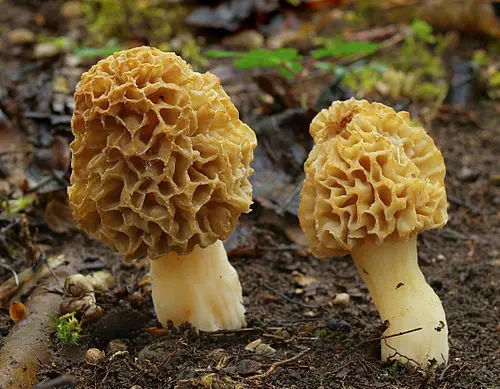
A spring morel with a rounded to oval cream, yellow or yellow-brown cap patterned by deep pits and ridges, joined to a pale stem.
What to check
Check a complete lengthwise section. A true morel is hollow through cap and stem, and its cap has real pits and ridges rather than broad brain-like folds. The lower cap edge is joined to the stem rather than hanging freely. These clues establish a true morel, but exact species within the yellow morel group may still require regional or DNA evidence.
Variation
Caps range from pale cream to ochre or yellow-brown, with shape and ridge pattern changing as they expand. The historical M. esculenta name has covered more than one modern species concept, so photographs and old records are not always exact-species evidence.
Lookalikes
Gyromitra species usually have wrinkled or brain-like caps and may contain gyromitrin. Verpa species have a cap attached only at the top and can cause serious illness. Hollow structure is useful, but it should not be treated as a complete safety guarantee or as proof of M. esculenta itself.
Habitat and range
Fruits in spring on woodland, scrub and disturbed soil. Lime-rich ground is common in European accounts, while woodchip morels and yellow morels in other regions may represent different Morchella species.
Food safety
Edible, with caution.
Use this profile to learn what to examine and compare, not as proof that a mushroom is safe to eat. Check the whole specimen and every important lookalike before reaching an identification.
Photographs
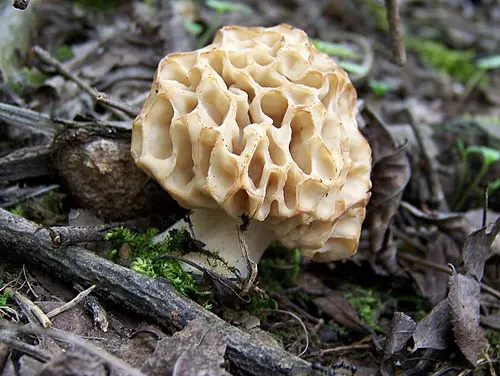 Mars 2002 / CC BY-SA 3.0