
About this fungus
Orange Grisette is a fungus in the Amanitaceae family. Its habitat and field characteristics are summarised below.
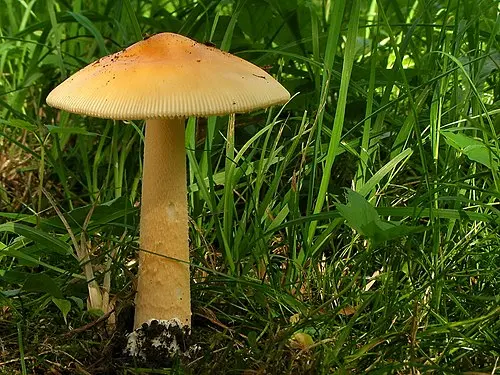
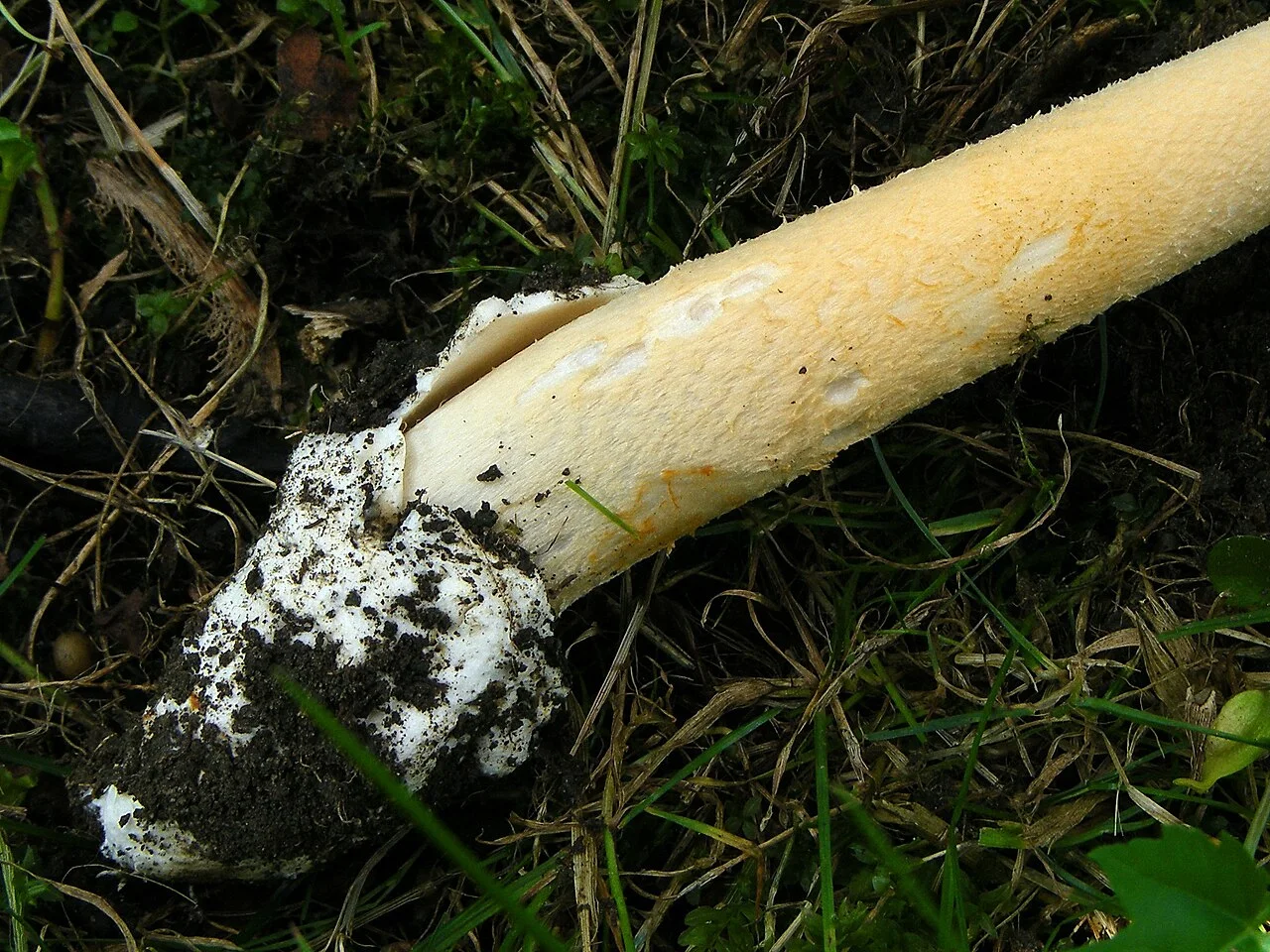
A tall, slender ringless Amanita with a smooth saffron-orange to apricot cap. The mature cap has a conspicuously comb-like edge, often paler than its darker centre. Its orange-tinged stem is marked with soft whitish zigzags and rises from a large white sack at ground level, giving a more colourful and patterned appearance than the Tawny Grisette.
What to check
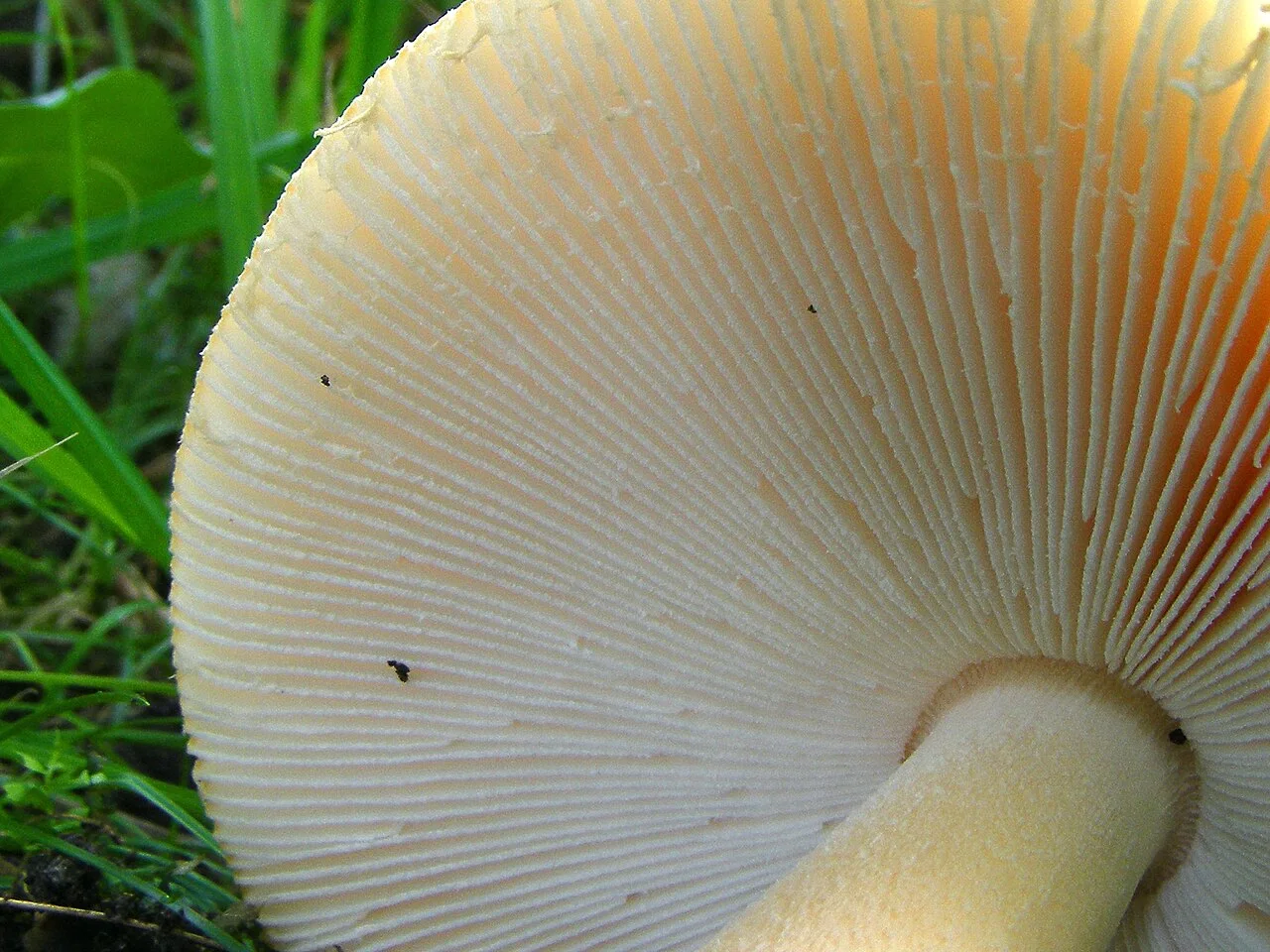
Lift the entire base rather than snapping the stem. A mature specimen should have no ring, no rounded basal bulb and a large loose, membranous volva that is white outside and often orange-yellow on its inner face. The pale orange stem normally carries soft white chevrons or irregular scaly bands. Check for a smooth orange cap with deep radial grooves around the mature edge, crowded cream gills that are free or only narrowly attached, and a white spore print. An unopened button hides most of these characters and cannot be assessed from cap colour alone.
Variation
Caps range from pale yellow-orange through saffron and apricot to orange-brown, usually with a deeper centre and paler edge. Sun and age can bleach them considerably. The cap starts egg-shaped, then becomes convex, broadly flat or slightly upturned, usually keeping a low central bump. Stem markings can be bold or faint and may wear away. A nearly smooth-stemmed collection therefore needs extra care because several other ringless Amanita species share the same basic outline.
Lookalikes
Tawny Grisette, Amanita fulva, is usually smaller and more subdued tawny-brown, with a white or much smoother stem and a volva that often develops rusty stains. Caesar's Mushroom, Amanita caesarea, has a bright orange-red cap but also yellow gills, a yellow stem and a large hanging ring. The toxic Jeweled Amanita, Amanita gemmata, can be yellow-orange but normally has cap patches, a ring or ring remnants and a bulbous rather than freely sack-like base. The whole ringless Amanita group contains close species, and North American orange grisettes may belong to the regional Amanita americrocea group rather than the European Amanita crocea concept.
Habitat and range
Ectomycorrhizal with trees in woodland, wooded grassland and mossy clearings. Birch is a frequent partner, with oak, beech, spruce, pine and larch also reported. European accounts often place it on acidic soil, although local host and soil patterns vary. Fruiting is mainly from summer into autumn. The name is best established for European material, while similar orange grisettes in North America and Asia need regional keys and sometimes DNA evidence.
Food safety
Edible, with caution.
Use this profile to learn what to examine and compare, not as proof that a mushroom is safe to eat. Check the whole specimen and every important lookalike before reaching an identification.
Photographs
 Grzegorz Spike Rendchen / CC BY-SA 3.0
 Grzegorz Spike Rendchen / CC BY-SA 3.0
Species to compare
Similar mushrooms to compare against: